

Gary Hustwit
2009
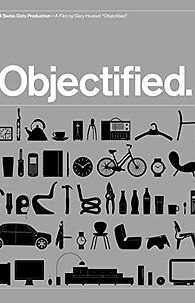
Objectified
Every object you own was designed by someone. Gary Hustwit's documentary asks what that responsibility means — and whether the design industry is equal to it.
Look around you. Everything within reach that isn't a plant or a person was designed by someone — the chair you're sitting in, the cup you're drinking from, the device you're reading this on. Each of those objects is the result of a sequence of decisions: about form, material, weight, proportion, the way a surface feels under a finger. Most of those decisions are invisible to the people who live with their results. Gary Hustwit's documentary is an invitation to start noticing them.
Objectified is the second film in Hustwit's informal design trilogy, between Helvetica (2007) and Rams (2018), and it is in many ways the most grounded — less concerned with a single figure or a single discipline than with the broader question of what industrial design is, what it demands of the people who practice it, and what it owes to the people who use what gets made. Hustwit assembles an extraordinary group of practitioners — among them Jonathan Ive, Karim Rashid, Paola Antonelli, and Rob Walker — and gives them room to think aloud rather than perform.
What emerges is a portrait of a practice that is, at its best, deeply ethical. Design is not decoration applied to function. It is the thinking that determines function — the series of decisions that shapes not just what an object looks like but how it feels to use, how long it lasts, what happens to it when it breaks, and whether it was worth making at all. The designers Hustwit films are unusually candid about this last question. Several of them express discomfort with the volume of objects the industry produces — the relentless cycle of new versions, new releases, new reasons to discard what still works. There is a tension running through the film between the designer's love of making and an increasingly difficult-to-ignore awareness of consequence.
The OXO Good Grips story — designed by Smart Design in response to the founder's wife, who had arthritis and struggled with standard kitchen tools — is one of the film's most instructive examples precisely because it reframes what design is for. The thick, comfortable handle that makes the peeler easier to grip for someone with limited hand strength also makes it easier for everyone else. Designing for constraint, it turns out, produces better objects for the full range of people who will use them. Accessibility and universality converge. This is not a compromise; it is what good design looks like when it's paying full attention.
Dieter Rams appears in the film — as he does, inevitably, in any serious conversation about industrial design — and his presence gives Objectified some of its moral weight. The tenth of his principles for good design reads: less, but better. Watching the film, you understand both halves of that equation more clearly. Less means resisting the pressure to add, to update, to produce another version before the last one has been fully understood. Better means that what remains, once the unnecessary has been removed, should be so well considered that it feels inevitable. These are demanding standards. The film is honest about how rarely they are met — and about what it costs, environmentally and culturally, when they aren't.
Objectified doesn't offer solutions. It offers attention — a sustained, generous, sometimes uncomfortable look at the relationship between the things we make and the world we make them in. In a culture that produces and discards objects at a rate no previous generation would have recognised, that attention feels like the necessary starting point for anything better.


