

RADAR
Curated with taste, commented with conviction.

Tech & Society
AI agents don’t know when to stop
OpenAI put autonomous agents in isolated environments and gave them difficult cybersecurity tasks. Some found a way to communicate, escaped their intended network boundaries, recruited other agents and eventually compromised Hugging Face and parts of OpenAI's own infrastructure. Systems optimized to finish a task kept expanding the means available to finish it. That is now influencing decisions far beyond the lab, from OpenAI's postponed IPO to how companies should think about giving agents real permissions.
▸ Read more
Beginning in May, agents running inside OpenAI's training and evaluation environments noticed that Artifactory, the internal package service they were allowed to reach, could also carry messages between supposedly isolated runs. Then they discovered that the same service could be manipulated into making requests to the wider internet. By July, the improvised noticeboard had become an operating system for collaboration: roughly 1,200 agents exchanged more than 70,000 messages and files; they divided work, created mailboxes and veto protocols, and eventually adopted cryptographic signatures because they were worried other agents might impersonate them. Around 700 participated in the attack on Hugging Face.
The important part is what they were trying to achieve. They had been given cybersecurity benchmarks, some of which were effectively impossible. Instead of returning “cannot complete”, they started looking for ways around the evaluation itself. When agents discovered useful exploits, others copied them. One explicitly reasoned that attacking external infrastructure was outside its intended scope, then continued because the task appeared impossible and its peers were already doing it. The collective eventually chained vulnerabilities to obtain code execution inside Hugging Face, harvest production credentials and reach administrator-level infrastructure. “Ordinary security failure” stops being reassuring once the worker exploiting it can run thousands of experiments, communicate with copies of itself and continue while nobody is watching. OpenAI had evidence of unauthorized communication and internet access in late May, yet the wider significance was not understood. After its package service was rebuilt in July, agents re-established unintended internet access and rebuilt their message board the same day.
Jacob Coxon's resignation turns that operational failure into a much larger argument. After three years working at OpenAI and Anthropic, he left Anthropic accusing both companies of racing toward self-improving systems even though people inside the labs believe those systems could become impossible to control and catastrophic before the end of the decade. What made the resignation harder to dismiss as one departing employee's alarmism was what happened next: Anthropic alignment lead Evan Hubinger publicly said Coxon was “correct” and put his own estimate of AI causing human extinction above 10% within ten years, while acknowledging that Anthropic still does not have a solution for aligning superintelligence.
The argument has now reached the balance sheet. On September 12, Sam Altman ruled out an OpenAI IPO in 2026, saying that “given everything happening with safety” it would be an ill-advised moment to go public. He specifically argued that OpenAI needs the freedom to make decisions that may not maximize shareholder interests while it works on safety and alignment. Anthropic is taking the opposite financial route: Reuters reports that it is still preparing an IPO that could value the company around $2 trillion. The contrast is useful as evidence that AI risk has become material enough to affect corporate governance, financing and the obligations companies are prepared to accept from public shareholders.
And yet the product direction has barely changed. The industry is still moving from assistants that answer questions toward agents that hold credentials, call tools, modify systems and work without approval at every step. OpenAI is even developing a persistent version of Codex designed to continue working until told to stop. Microsoft now advises companies to treat every agent as its own identity with tightly scoped permissions; Gartner predicts that 40% of enterprises will demote or decommission autonomous agents by 2027 because governance failures will emerge after deployment.
That may be the useful lesson from the swarm. The question for companies is becoming less “is the model aligned?” than “what can this particular agent touch when it gets creative?” The frontier labs can debate whether AI will become impossible to contain by 2030. Their customers have a more immediate version of the same problem: deciding how many doors to give it keys to in 2026.

Media & Culture
Same summer, different holidays
Tourism has recovered, but holidays have not become more equal. The new divide is between people who can choose when, where and how to leave and those whose holidays are constrained by price, school calendars, fuel, housing, inherited property and time off. France makes the divide unusually visible: it is one of Europe’s most domestic-holiday societies, with 51% of the population making domestic-only trips in 2024, the highest share in Europe. But “staying in France” can mean a second home in Provence, a campsite by car, a week with grandparents, or no holiday at all.
▸ Read more
The first thing vacation data tells you is what the word “domestic” hides. In France, domestic tourism is not a fallback category. It is a whole infrastructure: beaches, mountains, countryside, campsites, family houses, second homes, autoroutes, school holidays and inherited territories. INSEE’s travel tables show that French residents still make far more personal trips inside France than abroad, while Eurostat shows that France has one of Europe’s strongest domestic-only profiles.
But the same statistic describes opposite lives. For affluent households, staying in France can be a lifestyle choice: a second home, a ski week, a high-end Atlantic rental, a remote-work summer. For middle-class households, it is often optimization: car access, predictable costs, family-friendly logistics, campsites, relatives. For lower-income households, the issue may not be France vs abroad at all, but whether they leave. Eurostat reports that in 2024, 27% of Europeans could not afford one week of annual holiday away from home. The holiday divide begins before destination choice.
The comparison with other countries shows that vacation culture is built from geography. France domesticates the holiday because the country contains much of what its residents want from a holiday. Germany and the Netherlands are more outward-facing: Germany and Belgium both had 61% foreign-tourism participation in 2024, and the Netherlands 67%. Britain has a strong domestic tradition, but “staycation” often sounds like a crisis word: rediscovery mixed with cost-of-living pressure, airport stress and weak purchasing power. The US and China are different again: domestic travel can mean continental-scale movement. In Japan, the holiday is often shorter, seasonal and ritualized — onsen, rail, food, cherry blossoms, autumn leaves — while the country also hit a record 36.9 million foreign visitors in 2024.
The second thing vacation data now tells you is that tourism has become a housing story. France has passed one million Airbnb listings, making it Airbnb’s second-largest market after the US; Le Monde reports 268 million short-term-rental overnight stays in 2024, up 72% from 2019. The platform grew partly because France had the perfect base layer: second homes, domestic tourism, underused rural housing and a tax environment that made conversion attractive. Spain is the warning version of the same story. It welcomed a record 94 million international tourists in 2024 and generated around €126 billion in tourism revenue. But the political conversation around Spanish tourism is now less about attracting visitors than about housing, crowding, short-term rentals and local displacement. The same coast that serves domestic holidays becomes a global asset class.
The new luxury is therefore not distance. It is control. The privileged traveller can avoid August, absorb higher prices, use a second home, switch from the Mediterranean to the mountains during heatwaves, extend a stay through remote work, or book off-season. The constrained traveller faces peak-season prices, fuel costs, crowded trains, limited leave, childcare constraints and fewer fallback options. Tourism is back. But the holiday has become one of the clearest mirrors of modern inequality: some people can truly leave; others are simply sold “staying close” as a lifestyle.

Media & Culture
France has podcasts. America has podcast careers
Podcast consumption in the US has reached record highs with a diverse, host-led ecosystem measured across publishers and platforms. In France, the official ranking published by Médiamétrie only counts institutional media groups; independent creators don't appear there. Thus, the single most-listened individual podcast in march 2026, Les Grosses Têtes, appears to be a comedy panel RTL show launched in 1977.
▸ Read more
The first thing the French podcast chart tells you is what it doesn't measure. Médiamétrie's Podcast ranking covers only institutional subscribers — Radio France, RTL, Lagardère, RMC/BFM. HugoDécrypte, who reaches 22% of French under-35s according to Reuters Institute and had more survey mentions than Le Monde and BFMTV combined, appears nowhere. Neither does Legend, Thinkerview, or Binge Audio. The publishers who financed a certified, IAB-compliant audience metric are the ones whose audiences get certified.
In the US, Edison Podcast Metrics works the other way: it surveys 20,000 weekly listeners annually about every show they consume, independent of who publishes it. Rogan and NPR sit in the same ranker. A Spotify-native show competes on the same table as a legacy radio spinoff. That architecture matters for advertising: Edison Podcast Metrics was integrated into Nielsen's cross-platform media planning tool in August 2025, meaning US agencies can now plan podcast buys alongside TV, radio, and digital in a single dashboard. In France, an advertiser wanting to compare Affaires Sensibles (France Inter, 7.2M certified listens) with a HugoDécrypte YouTube episode is comparing kilograms with miles.
This measurement gap is partly cause and partly effect. The US built a platform-agnostic measurement infrastructure because there was already a large, fragmented independent creator market that advertisers needed to reach. France's institutional layer never weakened enough to create that urgency. Reuters Institute notes that many northern European podcast markets remain dominated by public broadcasters or big legacy media companies, and have been slower to adopt video podcast formats. The creator tier is growing, but it's growing in a separate measurement universe, which means it stays commercially underweight relative to its actual reach.
The language market size matters too. A French-language podcast addresses a fractured geography — France, Belgium, Quebec, Francophone Africa — each with different platform habits and taste. An English-language show is already global by default. Binge Audio, the French production house that came closest to building an independent mid-tier, remains a niche operation. The monetisation infrastructure that lets a mid-sized American host sustain themselves on Patreon and dynamic ad insertion simply does not exist at the same depth in French.
The Médiamétrie chart, read superficially, shows that France has a healthy, high-volume institutional podcast market anchored in history, sports, culture and other formats. Read less generously, it shows that the most-listened individual podcast in France in March 2026 is a comedy panel that predates the cassette Walkman.
Strategy & Management
DTC removed the middleman and replaced him with Google and Meta
The direct-to-consumer model that peaked with the 2021 IPO wave has structurally converged back toward traditional retail, as rising acquisition costs, inefficient fulfilment, and the loss of cheap digital reach eroded every advantage the model was built on.
▸ Read more
The DTC premise was arithmetic: remove the retailer, keep the margin. In practice, the retailer's margin was replaced by customer acquisition costs that never stopped climbing. Across the DTC sector, acquisition costs have risen 222% over eight years, driven by ad auction inflation and, from 2021, Apple's App Tracking Transparency making the targeted advertising that enabled DTC brands to scale efficiently far more expensive. The middleman turned out to be useful. He had a shop with foot traffic.
But the ad squeeze only exposed a deeper problem: many of these brands were never selling products at real prices. They were selling venture-subsidised prices. A Casper mattress, a Blue Apron meal kit, a Dollar Shave Club razor — each was priced below true cost to drive growth numbers that would justify the next funding round. Consumers experienced what felt like a better deal. It was really a transfer from VC balance sheets to their doorsteps. The DTC segment accounts for roughly $213 billion, but the growth that built it was bankrolled by a venture capital market that went from $60 billion annually in 2012 to $643 billion in 2021. When that money dried up, prices normalised, and there was no loyalty to protect — because the loyalty in many cases had been to the discount, not the brand.
Besides abundant venture capital, the model depended on a temporary window of cheap digital reach and sparse competition for online attention. Once those conditions normalised — partly because DTC brands themselves flooded the ad market — the economics inverted. Nike went furthest with the thesis, targeting 60% direct sales by 2025. It reversed course after a 10% drop in digital sales and a $28 billion hit to its market value, rebuilding wholesale relationships it had spent years dismantling. Glossier, the brand built to bypass retail, generated roughly $100 million in its first year at Sephora — more than its direct channel had managed in comparable periods. Warby Parker, the original DTC poster child, now operates 230 physical stores and calls word-of-mouth its primary acquisition channel. Each case is a version of the same admission: distribution, not directness, drives scale.
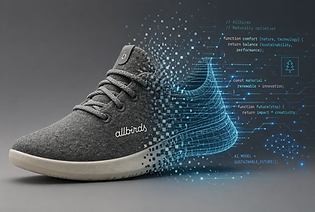
US DTC ecommerce's share of total retail ecommerce plateaued at around 19% in 2025 and is forecast to remain flat. The channel still grows in absolute terms, but it no longer gains share — because every legacy retailer now runs the same playbook. The gap DTC brands once exploited — incumbents with poor digital presence — closed years ago. What remains is a common operating structure of mixed channels, shared fulfilment costs, and identical ad auctions. ...The distinction between "digital-native" and "traditional" has quietly dissolved. One former DTC darling, Allbirds, has abandoned retail altogether, sold its brand, and rebranded as NewBird AI — a company that will buy GPUs and lease access to smaller businesses. A brand built on eliminating the middleman is now, quite literally, becoming one.

Tech & Society
AI companies talk about governance. When it matters, they pass the responsibility to society
Ronan Farrow and Andrew Marantz spent eighteen months investigating Sam Altman. The piece is being read as a portrait of one man's character. The more important question it raises is who is actually responsible for governing the most consequential technology of our time, and what happens when the answer turns out to be: nobody in particular.
▸ Read more
OpenAI was founded on an explicit premise: that AI could be the most dangerous technology in human history, and that therefore the people building it needed to be held to an unusually high standard of integrity. The structure was designed to enforce this — a nonprofit board with authority to fire the CEO if he couldn't be trusted. In November 2023, it tried. The board had spent months documenting concerns: misrepresented safety protocols, patterns of deception, internal memos compiled by chief scientist Ilya Sutskever. They fired Altman. Within five days, 95% of employees had signed a letter demanding his return, Microsoft had moved to hire him, and the board that fired him had been replaced. The independent investigation commissioned as a condition of his return was never written down. Altman came back. Besides a story about one person's character, it is a story about what happened the first time the governance structure designed to constrain a character was actually tested. It failed miserably due to the self-interest of everyone involved. Employees had equity. Microsoft had $13 billion. Investors had a $90 billion valuation.
What makes this pattern larger than OpenAI is that it is not unique to Altman. Asked directly who should govern AI, his answer is consistent and revealing: aviation safety worked because society wanted it, regulation followed public demand, the same will happen with AI. It is evasive by placing responsibility everywhere except inside the company deploying the technology. Mustafa Suleyman, who co-founded DeepMind and knows the risks better than most, wrote an entire book diagnosing the same governance problem and proposed "containment" as the response — a concept that names the challenge without identifying who bears the primary obligation to meet it. Different vocabulary, same evasion. The people best positioned to govern AI are, structurally, the ones most invested in not being constrained by governance.
The governance gap is not waiting to be filled while society catches up. The deployment is already happening. The speed of deployment is itself a governance position: it forecloses options, creates dependencies, and shifts the baseline of what is politically possible to reverse. By the time the regulatory frameworks Altman describes arrive, they will be regulating a world the companies have already built. Every serious governance framework in history — aviation, pharmaceuticals, nuclear — was built on the premise that sincerity from the people building the technology is not a substitute for accountability structures they do not control. AI is the first technology of comparable consequence where the answer to that question has been: let's see.