

RADAR
Curated with taste, commented with conviction.

Media & Culture
She wrote it because she meant it
L'Oréal and McCann commissioned a documentary to tell the story of Ilon Specht, the 23-year-old copywriter who wrote "Because I'm Worth It" in 1971 — and whose conviction that women deserved to be spoken to differently became the foundation of one of the most enduring slogans in advertising.
▸ Read more
The slogan has been running for 54 years. The woman who wrote it is only now getting a documentary. That gap is the whole story, and to the film's credit, it doesn't flinch from it. Specht didn't write "Because I'm Worth It" as a brand strategy — she wrote it because she was angry at a roomful of men who thought the ad should show a woman standing near an open window with the curtains blowing. The line was an act of irritation, not inspiration.
But irritation needs a platform. Specht struck a nerve, and L'Oréal's reach is what let it travel — across countries, decades, generations of women who recognised something in four words that most campaigns can't achieve in forty. The line and the brand are not separable. Without L'Oréal, it stays in the room.
"Because I'm Worth It" keeps working not through repetition but through relevance — each new generation finds the line and makes it their own, because the feeling it names remains unresolved. Specht's irritation turned out to have a longer half-life than most strategies. The documentary L'Oréal commissioned to tell that story is, of course, also a campaign — which doesn't make the story less true. It just means the line is still working, fifty-four years later, in formats that didn't exist when Specht wrote it.

Design & Creativity
Selling nothing different, very differently
Liquid Death built a $1.4 billion valuation selling water that, by its own CEO's admission, is no different from any other water — purely through branding, packaging, and a counterculture identity that its competitors weren't using.
▸ Read more
The most revealing line comes from the CEO: "There's not really anything incredibly different about our product… it's all just brand differences and packaging differences, and that's why people buy things." A founder who says the quiet part out loud is either very confident or very tired of pretending otherwise.
The actual strategic move was less punk rock than it sounds. Liquid Death found a gap in the aesthetic of the category — premium water occupied by alpine purity etc., with nothing serving the person who finds that kind of aspiration suck. The skull cans aren't a rebellion against the water industry; they're a very deliberate pitch to a demographic that premium brands had left on the shelf. Counterculture, in this case, is a positioning decision.
The distribution play is where it gets less romantic. Getting into Live Nation venues early, targeting bars over retail — these weren't punk instincts, they were placement decisions made precisely because cans would be photographed and shared. The organic virality wasn't accidental; it was engineered to look accidental, which is a perfectly respectable strategy.
At over 100,000 retail locations, selling watches and t-shirts to fans who never needed convincing, Liquid Death has built something most beverage brands never do — a brand people actually want to be associated with. The question is whether the spirit of rebellion scales.

Research & Data
The drink that forgot it was seasonal
Cold coffee — iced coffee, cold brew, frozen drinks — more than doubled in U.S. consumer spending between 2016 and 2023, driven by younger generations who have decoupled the category entirely from temperature or season. Hot coffee grew 20% in the same period.
▸ Read more
Every generation before millennials treated iced coffee the way they treated rosé — a warm-weather concession, not a lifestyle. Millennials started loosening that logic. Gen Z dropped it entirely. Dunkin' reports cold drinks now represent two-thirds of total beverage sales; at Dutch Bros, it's 90%. Ten degrees outside, snow falling, cold brew in hand. The weather became irrelevant.
Clear plastic cups photograph. Foam can be dyed green. Caramel ribbons and glitter suspensions require a cold, still liquid to exist as designed. The drink didn't just appeal to younger consumers aesthetically — it was engineered, product by product, to perform on a phone screen. Hot coffee poured into a ceramic mug produces a thin curl of steam. Not much to work with. The other drink has a Wicked collaboration.
Iced coffee is, functionally, what happened when America tried to turn coffee into a soft drink. Ready-to-drink cold coffee consumption rose in the U.S. well above the global rate. The parallel with energy drinks isn't incidental. It's the same pitch: caffeine, customisable sweetness, format designed for mobility. Starbucks is no longer competing with Italian espresso culture. It's competing with Mountain Dew.
Europe's slower adoption gets attributed to climate, but the more precise explanation is that Europe already has a coffee identity to protect. So do Turkey and Brazil. None of them are especially eager to swap it for a cup with a dome lid and three pumps of vanilla syrup. America never had that anchor. Its coffee culture was more permissive. So far.
Media & Culture
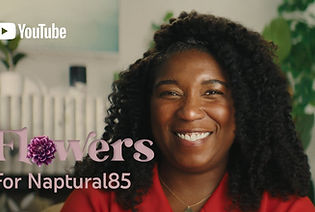
How @Naptural85 inspired a community of natural hair creators
YouTube's Flowers series honours Whitney White (Naptural85), who started filming her natural hair journey in 2008 because the internet had nothing to offer her — and in doing so built the community that would fill that void for hundreds of thousands of others.
▸ Read more
Adichie published Americanah in 2013. Naptural85 launched her channel in 2008. By the time the novel came out, the community it describes was already five years old.
Ifemelu arrives in America, straightens her hair to pass for professional, watches it fall out, and eventually starts a blog for Black women navigating their texture in a country where straight hair is the unmarked option. The blog is a literary device. Whitney White was doing the actual thing — filming herself mixing flaxseed gel in a Boston apartment because there was genuinely nothing else to watch, no template to follow, no genre yet to belong to. She wasn't building a movement. She was solving a personal problem in public.
What Americanah captures as political — the pressure to relax, the cost of refusing, the quiet relief of finding someone who looks like you and isn't apologising for it — Naptural85 was delivering as practical. The politics were present either way; one text named them, the other bypassed the naming and just showed you how to do a twist-out. Adichie gave the movement a literary architecture after the fact. White had already poured the foundation.
So when YouTube calls her a pioneer who finally gets her flowers, the more precise word is witness — someone who saw the gap early enough that documenting her own way through it became, accidentally, the map.

Media & Culture
Marketing to tourists who are tired of overtourism
To attract visitors to Norway's capital, Visit Oslo released a film following Halfdan, a disaffected local in his thirties, who wanders the city complaining about everything that makes it worth visiting.
▸ Read more
The film's grumpy narrator opens with "I wouldn't come here, to be honest." Then spends nearly two minutes accidentally making Oslo sound perfect.
The joke works. Everything he resents is something someone exhausted by Barcelona, Venice or Kyoto would trade for: no queues, no exclusivity, restaurants you can just walk into, a king who's allegedly just around the corner. The complaints are the pitch.
What makes this more than a clever one-liner is that it arrives at exactly the right moment. Overtourism has become a genuine anxiety — for cities drowning in it and for travellers who no longer want to be part of the problem. Oslo doesn't pretend to be the most spectacular city in Europe. It pretends to be slightly disappointing, which in 2024 is the most sophisticated positioning a destination can have.
There's also something worth noting about the production. Shot in two days with a crew of four, inspired by Joachim Trier's Oslo trilogy and Kristoffer Borgli's deadpan shorts — it looks like an indie film, not a tourism board commission. That's a creative decision that makes it believable.
A 26% increase in international arrivals. Zero saccharine couples dancing into the sunset. The last line he delivers, sitting outside a café: "A city should feel a little hard to get. It's like a good relationship — it's not supposed to be easy." Is meant like the pinnacle of criticism. It lands as the best tagline Oslo never officially wrote.