

RADAR
Curated with taste, commented with conviction.
Strategy & Management
What EVs did for tires that tires couldn't do for themselves
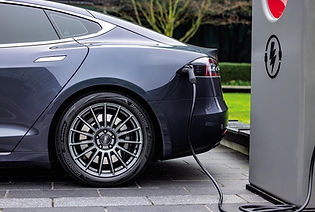
EVs are structurally good news for tire makers: heavier vehicles, instant torque, and regenerative braking wear through rubber faster, more often, and EV-specific tires command a 50% price premium — reversing decades of near-stagnant demand.
▸ Read more
The tire industry's deepest problem has always been its own R&D. Better compounds mean longer-lasting tires, which mean fewer replacements, which mean slower revenue. The business model depends on wear. The engineering keeps reducing it. For decades, the industry has been quietly working against itself.
EVs temporarily solve this. Heavier batteries, instant torque, regenerative braking — all of it scrubs rubber faster. The EV is not a better vehicle for tires. It is a worse one, and that's the whole point.
What makes this more than a short-term windfall is the pricing story. In a category where half of buyers choose on price, EV tires have created a technical urgency that justifies a premium. Noise dampening, load ratings, rolling resistance tuned for range — none of these were invented for EVs. But when the engine no longer covers the noise, they stop being engineering footnotes and become things customers actually ask for. The EV didn't give the industry new technology. It gave its existing technology an audience.
The irony is that the best players are now racing to make EV tires last longer too — because that's what premium engineering means. Which puts them back, eventually, on the same treadmill.
Strategy & Management
A 110-year-old product, a 4-year-old brand
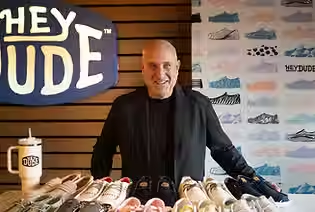
Terence Reilly — the CMO who previously made Crocs culturally relevant — applied the same playbook at Stanley, overseeing a revenue surge from $74M in 2019 to $750M in 2023 by shifting the brand's strategy away from the product itself toward community co-creation, scarcity mechanics, and letting TikTok creators reframe Stanley through their own cultural lenses.
▸ Read more
Stanley has been making the same steel vacuum bottle since 1913. The Quencher — the product that broke the internet — was introduced around 2016. So the "masterclass" is really about what happens when you stop treating a product as a thing to be sold and start treating it as raw material for other people's self-expression.
Reilly's move was structural: instead of building one brand narrative and distributing it, he handed the brand to hundreds of micro-communities and let each one build their own version of it. The cup became a sorority prop, a gym accessory, a colour-collector's obsession. None of those meanings came from Stanley's marketing department. The company's job was mostly to not get in the way — and to keep releasing new colourways on schedule. The car-replacement stunt after the viral fire video was the exception, not the rule: a single high-visibility act of generosity that confirmed what the community already believed about the product.
The Crocs parallel is worth sitting with. Reilly is now two-for-two on rehabilitating products that were either invisible or mildly embarrassing — which suggests the skill isn't category expertise but something more portable: an instinct for finding the latent community around an object and giving it just enough fuel to self-organise. Most brand managers spend their careers trying to control meaning. Reilly seems to have concluded that control is the problem.
The lead content controversy and the Target theft incidents are footnotes, but they're also evidence of what happens when desire outpaces the product's actual proposition. A $45 water bottle with a waiting list is no longer competing on function. At that point, the brand is running entirely on social energy — which is a perfectly valid position, and also one that has to be continuously earned, not managed.

Design & Creativity
CeraVe had never run an ad. Then they met Michael Cera
To launch its first-ever Super Bowl commercial, CeraVe orchestrated a three-week social media hoax where actor Michael Cera posed as the secret founder of the brand — before the stunt was revealed during the Big Game.
▸ Read more
The campaign didn't launch with the Super Bowl spot; it launched before it, in the murkiest, most algorithm-friendly corner of the internet, where nothing is quite real and everything gets screenshotted. Michael Cera being a skincare founder is the exact kind of absurd, low-stakes conspiracy theory that spreads not because people believe it, but because it's fun to pretend they do.
What Ogilvy understood is that the Super Bowl ad slot is no longer the event — it's the punchline. The real media was the four weeks of accumulated confusion, influencer seeding, and Reddit threads earnestly debating Cera's moisturising credentials. By the time the spot aired, the audience already had a relationship with the bit.
CeraVe is a serious dermatologist-recommended brand. It had never done mass advertising before. Its entry into pop culture wasn't through authority or aspiration — it was through humour. The brand didn't try to become cool. It let itself become a meme, on purpose, with full creative control.
Other brands have chased virality and looked desperate. This one engineered it and looked effortless. The difference is that the hoax respected the audience — it was clearly a joke for people smart enough to enjoy being in on it, not a trick designed to deceive.
The Cannes jury gave it the Social & Influencer Grand Prix. The real prize was proof that the most powerful launch format in 2024 wasn't a media buy. It was a well-placed rumour.
Tech & Society
Every new medium breaks the world before we figure it out
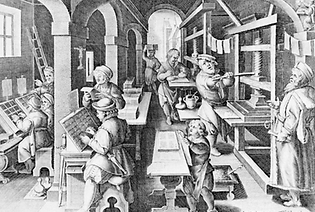
In this interview, novelist Daniel Kehlmann draws a direct line between the printing press and today's information crisis: new media reliably generates waves of propaganda, confusion, and violence before societies develop the tools to make sense of them.
▸ Read more
The printing press didn't just spread knowledge — it first spread chaos. Kehlmann's point is quietly devastating: the Thirty Years' War, one of Europe's bloodiest conflicts, was partly a media crisis. People suddenly had access to an overwhelming flood of competing narratives, with no way to distinguish a serious text from a political hit piece. Sound familiar?
What's striking is the structural inevitability of it. It's not that bad actors uniquely exploited the press — it's that every new medium has a phase where the infrastructure of trust hasn't caught up with the infrastructure of distribution. Gutenberg before fact-checkers. Facebook before content moderation. TikTok before anyone agreed on what "real" looks like.
Kehlmann is oddly optimistic: societies do eventually build those structures. The chaos has an end. But his caveat is the one that stings — back then, it took thirty years of war and a third of Germany's population. We got the internet in the 90s and we're still mid-carnage.
The uncomfortable implication: we may not be living through a crisis of bad actors or broken platforms. We may just be living through the standard transition period — the one that always happens, always hurts, and always eventually passes. The question is what gets lost in the meantime.
Media & Culture
Fancy sneakers went mainstream. Nobody noticed because everyone was already wearing them
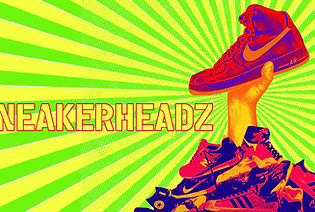
A documentary tracing sneaker collecting from niche subculture to global market, following collectors, designers and resellers across the US and Japan to chart how limited-edition kicks became simultaneously art object, financial instrument and everyday obsession.
▸ Read more
The film spends most of its time on extremes — the collector with 5,000 pairs in a storage unit he never visits, the riots outside limited releases, the machete found on the pavement outside a shoe store — and in doing so slightly misses its own story. The UPS man wearing chocolate Adidas is a throwaway line.
What actually happened to sneakers is quieter and more pervasive than anything the film's most colourful characters illustrate. The sneakerheadz subculture didn't stay a subculture that grew; it dissolved into everyday life. Luxury brands started doing design sneakers because their customers expected them to. Parents who never tracked a release date have strong feelings about their running shoes. The average wardrobe now contains more pairs than it did a generation ago, with no particular occasion attached to most of them.
The film frames this as a victory for the culture. It's more accurately the end of it as a subculture — and the beginning of something larger. When everyone is at least a little bit a sneakerhead, the culture stopped needing a name. As David Foster Wallace put it in his Kenyon commencement address: "There are these two young fish swimming along and they happen to meet an older fish swimming the other way, who nods at them and says 'Morning, boys. How's the water?' And the two young fish swim on for a bit, and then eventually one of them looks over at the other and goes 'What the hell is water?'"