Strategy & Management
DTC removed the middleman and replaced him with Google and Meta
The direct-to-consumer model that peaked with the 2021 IPO wave has structurally converged back toward traditional retail, as rising acquisition costs, inefficient fulfilment, and the loss of cheap digital reach eroded every advantage the model was built on.
The DTC premise was arithmetic: remove the retailer, keep the margin. In practice, the retailer's margin was replaced by customer acquisition costs that never stopped climbing. Across the DTC sector, acquisition costs have risen 222% over eight years, driven by ad auction inflation and, from 2021, Apple's App Tracking Transparency making the targeted advertising that enabled DTC brands to scale efficiently far more expensive. The middleman turned out to be useful. He had a shop with foot traffic.
But the ad squeeze only exposed a deeper problem: many of these brands were never selling products at real prices. They were selling venture-subsidised prices. A Casper mattress, a Blue Apron meal kit, a Dollar Shave Club razor — each was priced below true cost to drive growth numbers that would justify the next funding round. Consumers experienced what felt like a better deal. It was really a transfer from VC balance sheets to their doorsteps. The DTC segment accounts for roughly $213 billion, but the growth that built it was bankrolled by a venture capital market that went from $60 billion annually in 2012 to $643 billion in 2021. When that money dried up, prices normalised, and there was no loyalty to protect — because the loyalty in many cases had been to the discount, not the brand.
Besides abundant venture capital, the model depended on a temporary window of cheap digital reach and sparse competition for online attention. Once those conditions normalised — partly because DTC brands themselves flooded the ad market — the economics inverted. Nike went furthest with the thesis, targeting 60% direct sales by 2025. It reversed course after a 10% drop in digital sales and a $28 billion hit to its market value, rebuilding wholesale relationships it had spent years dismantling. Glossier, the brand built to bypass retail, generated roughly $100 million in its first year at Sephora — more than its direct channel had managed in comparable periods. Warby Parker, the original DTC poster child, now operates 230 physical stores and calls word-of-mouth its primary acquisition channel. Each case is a version of the same admission: distribution, not directness, drives scale.
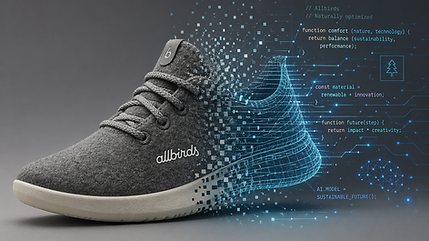
US DTC ecommerce's share of total retail ecommerce plateaued at around 19% in 2025 and is forecast to remain flat. The channel still grows in absolute terms, but it no longer gains share — because every legacy retailer now runs the same playbook. The gap DTC brands once exploited — incumbents with poor digital presence — closed years ago. What remains is a common operating structure of mixed channels, shared fulfilment costs, and identical ad auctions. ...The distinction between "digital-native" and "traditional" has quietly dissolved. One former DTC darling, Allbirds, has abandoned retail altogether, sold its brand, and rebranded as NewBird AI — a company that will buy GPUs and lease access to smaller businesses. A brand built on eliminating the middleman is now, quite literally, becoming one.